
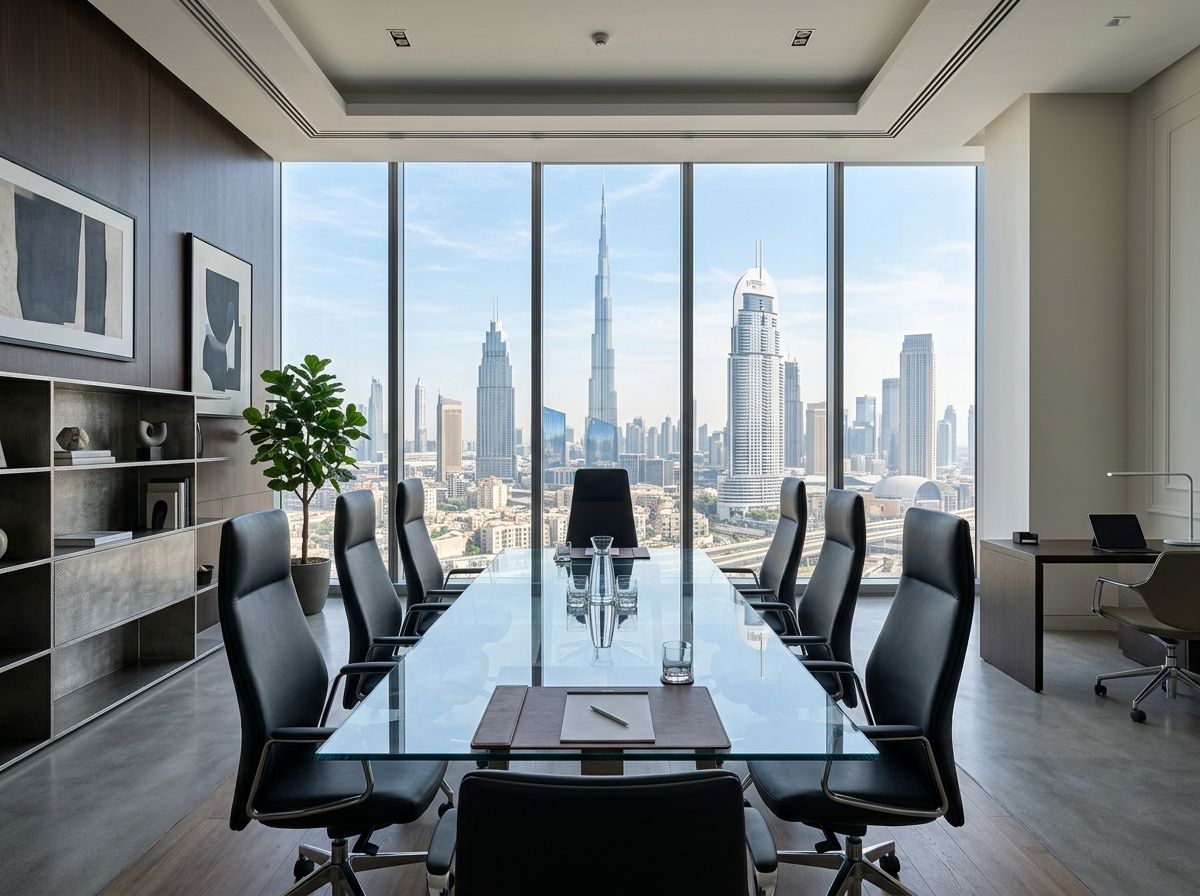
Commercial Real Estate in Dubai: The 2026 Strategy for Renting Space
Searching for a commercial property for rent in Dubai? Learn about 2026 market trends, Mainland vs. Free Zone rules, and our step-by-step leasing guide.
Finding the right commercial property for rent in Dubai is about more than just finding an office with a view; it is a strategic business decision that directly impacts your legal standing, operational efficiency, and long-term overhead. As we head through 2026, the Dubai commercial market has matured, offering businesses a more balanced landscape characterized by a "flight to quality" and highly structured lease negotiations.
Whether you are launching a startup, moving an established enterprise to the mainland, or expanding into a Free Zone, navigating the commercial leasing process requires absolute precision. Here is your strategic guide to securing the perfect operational footprint.
1. Understanding the Commercial Landscape
Before you even begin touring properties, you must strictly classify your operational and legal needs. In Dubai, commercial space is bifurcated into two distinct regulatory environments:
- Mainland (Onshore): Properties located within general commercial districts like Business Bay, Al Quoz, or Deira. These are regulated by the Department of Economy and Tourism (DET) and offer the legal freedom to conduct B2B and B2C business directly across the entire UAE local market.
- Free Zones: Specialized, ring-fenced jurisdictions (e.g., DIFC, DMCC, JAFZA) operating under their own independent regulatory frameworks. While you are generally limited to conducting business within that specific Free Zone or internationally, you benefit from specific corporate tax incentives and 100% foreign ownership structures.
Types of Properties Available
- Office Spaces: Ranging from high-tech, all-inclusive serviced offices designed for rapid deployment, to premium "Grade A" shell-and-core spaces in prime financial hubs.
- Retail & Showrooms: High-footfall, ground-level units engineered for B2C operations and experiential brand storefronts.
- Industrial Warehousing: Specialized logistical units in strategic corridors like Dubai Investments Park and Dubai South, perfectly optimized for e-commerce "last-mile" delivery and light manufacturing.
2. The 5-Step Roadmap to Securing Your Space
Securing a commercial lease in Dubai is a formal, highly regulated process. Unlike residential leasing, your commercial space is inextricably linked to your legal right to operate.
1.Align License with Location:The Legal Foundation.
Ensure your specific Trade License activity is legally permitted in the building or zone you are targeting. Your license classification and your physical address must perfectly "match" in the government database.
2.Due Diligence & Zoning:Verification.
Before signing an Offer to Lease, verify the property's "Usage" certificate (the Affection Plan). Never assume a space designated by the municipality for a warehouse can be legally retrofitted and used as a retail showroom.
3.Negotiation & Letter of Intent (LOI):Contract Drafting.
Submit a formal LOI outlining your terms. In 2026, landlords are increasingly open to negotiating rent-free periods (to offset your fit-out times) and multiple-cheque payment plans (4 cheques are becoming the new baseline for corporate occupiers) to assist with your cash flow.
4.Ejari Registration:Government Compliance.
Once the master contract is signed, you must immediately register it through the Ejari system. This provides your legal protection and is a mandatory prerequisite for everything from DEWA utility connections to processing employee visa sponsorships.
5.Fit-Out Approvals:Physical Construction.
If you are renting a raw "shell and core" space, you cannot simply start building. You must obtain structural No Objection Certificates (NOCs) from the landlord, Dubai Civil Defence, and the municipality before beginning any mechanical, electrical, or plumbing (MEP) works.
3. Financial Considerations: Beyond the Rent
Many businesses severely underestimate the "Total Cost of Occupancy." When building your operational budget for 2026, you must factor in the hidden structural costs of leasing:
- Value Added Tax (VAT): Commercial leasing is not tax-exempt. You must factor in a mandatory 5% VAT applied on top of all rental amounts and building service charges.
- Service Charges: These cover common area maintenance, building security, and HVAC cooling. In prime towers with high-end amenities, these charges can add significant monthly overhead to your baseline rent.
- Security Deposit: Standard commercial deposits typically sit at 5% to 10% of the annual rent, held until the termination of the lease.
- Fit-Out and Dilapidation Costs: If the unit is not fully fitted, expect to invest heavily in flooring, partitioning, and networking. Additionally, most leases require you to return the space to its original "shell" condition when you leave, known as dilapidation costs.
Final Thoughts: Securing Your 2026 Growth
The Dubai commercial real estate market in 2026 rewards businesses that approach leasing with a long-term, calculated strategy. The era of rushing into a lease just to secure a prestigious address is over. Today, it is about aligning your physical footprint with your operational cash flow, ensuring full regulatory compliance, and negotiating terms that actively support your business growth rather than restricting it.
Have Questions About Real Estate?
Contact our expert agents at Majestic Horizon to learn more.
Get in Touch